– FKR Yeshurun Yedidyah
An Introduction to Atomic Bombs
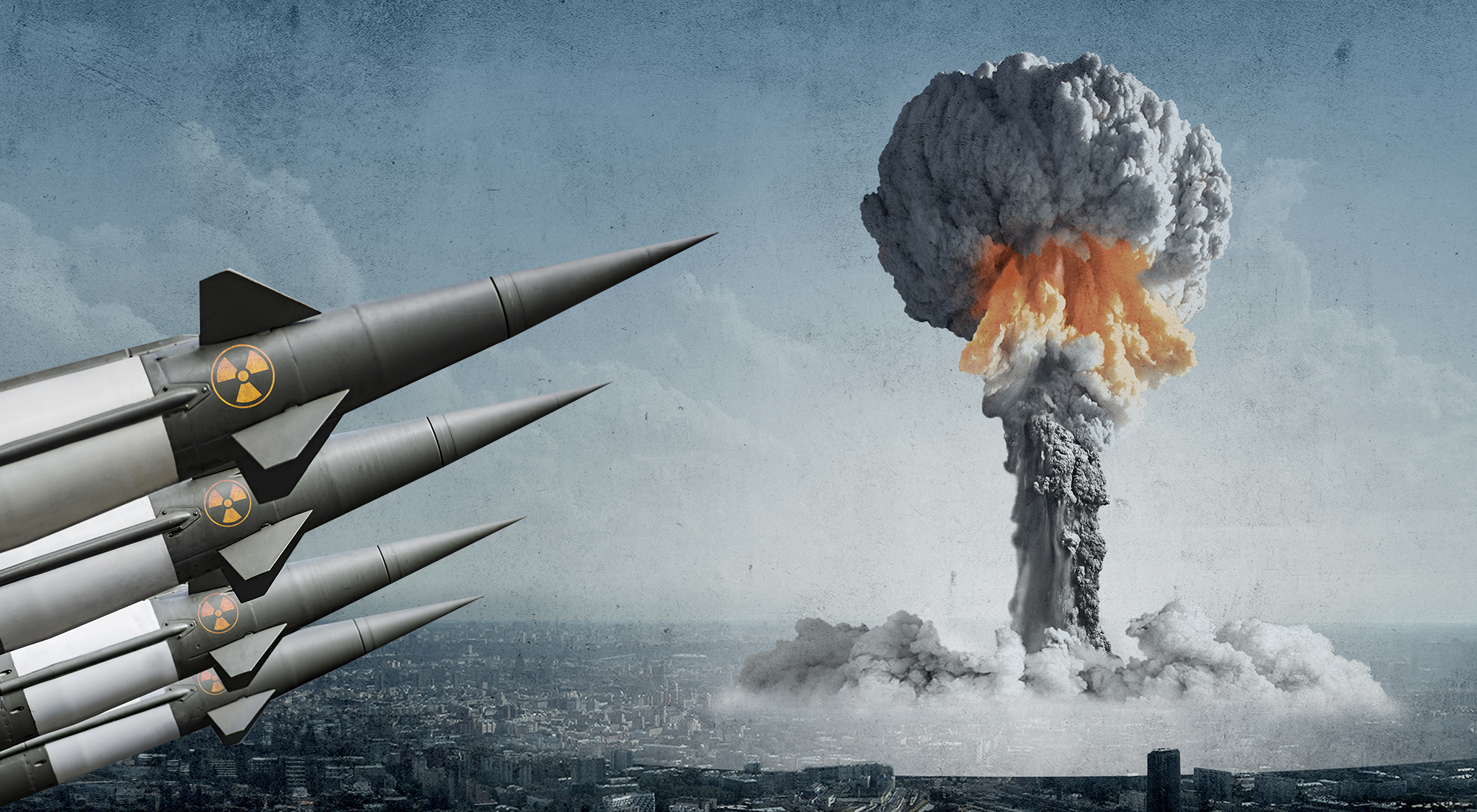
Nuclear power. A destructive force invented by Alfred Nobel with the intention of being used as a creative force and becoming a threat to mankind. It was using this power that the most dangerous of all weapons, the atomic bomb, was created. Hydrogen bombs, which are 3,000 times more powerful than these atomic bombs, are available in many parts of the world today. Used simultaneously, they can destroy the world in a matter of seconds.
The challenge for scientists like Stephen Hawking is that if another world war breaks out, it will be a nuclear war and nuclear wars will play a vital role in the destruction of the world. Scientists warned of the dangers posed to the world by nuclear weapons only after they witnessed the devastation wrought on the cities of Hiroshima and Nagasaki in Japan; But the Bible, the Bible of truth, foretold to the congregation as early as 1918 what the destruction of nuclear weapons would be like.
World War II introduced nuclear weapons
It was not until the end of World War II that the world realized that there was a weapon called the atomic bomb. Ten nations under the names ALLIES and AXIS fought in this war. The Allies were made up of Britain, France, the United States, Russia, Australia, New Zealand, China and British India. Italy joins forces with Germany in launching the Axis Axis, the beginning of the war. The same team was joined by Japan, which had already been at war with China for two years.
End of April with two giant heads dead
The war, which began on a small scale on September 1, 1939, turned into a world war in the following years, with the participation of many nations, and continued into 1945 to complete 5 years. In this case, April of that year had the next piece of good news for the allied team world. On the 28th of that month, the Italian dictator Benito Mussolini was assassinated by his own countrymen, and on the 30th, German dictator Adolf Hitler committed suicide by defeating the war. Germany and Italy surrendered unconditionally to the Allies.
Japan, which rejected the surrender and went to war
Of the three countries that were part of the Axis Squad, the war was almost over when two great leaders of the two countries were killed and both countries surrendered. But only Japan continued to be at war. In July, Britain’s allies called on Japan to surrender unconditionally. The Japanese government of the day rejected the invitation.
Unexpected ‘nuclear strikes’
The following August 8, at 8:15 a.m., a U.S. warplane dropped a nuclear weapon called the “Little Boy” on the Japanese city of Hiroshima. The first nuclear attack in world history. The death toll from the blast was 70,000. The death toll is said to be around 1 lakh 60-thousand. Disappointment overwhelmed the opponent who thought Japan was going to scream and surrender.
So two days later, at 11 a.m. on August 9, a plutonium bomb called the FAT MAN exploded in Nagasaki. The number of immediate deaths was 35-thousand. The death toll continues to rise to 80,000.
Differences between atomic and hydrogen bombs:
Although commonly referred to as nuclear weapons, the Hiroshima-Nagasaki weapons and their subsequent hydrogen weapons were fundamentally different.
Split bombs
Yes. Little Boy and Fat Man belong to the FISSION BOMBS category. These were made of uranium and plutonium and ignited with explosives weighing thousands of pounds. The big bangs that resulted from this ignition were a series of chain reaction of catastrophic atoms, splitting over an area of several kilometers. Those atoms have spread dangerous radiation. The catastrophic energy generated by such atomic mass vibrations shook the cities of Hiroshima and Nagasaki in a matter of minutes.
Thermal energy atoms
Hydrogen bombs have atoms of the isotopes titrium and tritium. Helium, a chemical released when these isotopes combine, transmits extremely powerful thermal energy in a chain reaction into hydrogen bombs. These hydrogen bombs are also referred to as thermonuclears.
Artificial clouds departing from Earth
The eruption from the Little Boy bomb dropped on Hiroshima released 15 kilotons of energy. It also sent a mushroom-shaped artificial cloud about 25,000 feet into the sky. Fat Mano, created an explosion that weighed about 21 kg.
America’s Sophisticated Hydron Bomb
Compared to these, the US-made B83, a sophisticated hydrogen weapon later, had a power of 1.2 megatons and was 80 times more powerful than the Little Mat.
Soviet Russia ‘nuclear test’ shakes world
Even more terrifying than the US hydrogen weapons was the TZAR BOMBA, the largest nuclear weapon tested by Soviet Russia in 1961. Made with a capacity of 50 megatons of energy, this hydrogen bomb was 3333 times more powerful than the Little Boy that completely destroyed Hiroshima.
As the bomb exploded, a mushroom-shaped cloud of smoke rose to an altitude of about 130,000 feet. It was four and a half times taller than Mount Everest. Not only that. Sent shock waves three times at a time around the world. Although it has been tested for about 57 years, it is still considered the world’s largest and most powerful nuclear weapon.
US possesses thousands of atomic bombs | Russia
Today, Russia tops the list of nuclear powers with 8000 nuclear weapons, including sophisticated hydrogen bombs. The United States is second on the list with 7,400 bombs, having introduced nuclear bombs to the world and pushing many countries towards multi-billion dollar funding for nuclear weapons production.
Of the 16,300 nuclear weapons currently in the world, 15,400 are held by Russia and the United States. The remaining 800 bombs are from France, China, the United Kingdom, India, Pakistan, Israel, North Korea and Iran, respectively.
If another world war were to break out, it would not be possible without the contribution of these 10 nations, which have enormous stockpiles of nuclear weapons.
OK. What is the Scriptural testimony to the increase in the use of nuclear weapons among such nations in recent times?
About the Author