The British Empire, which was renowned for its strength and bravery and spread across the world, has a very important place in the ranks of the Persian Empire, the Greek Empire and the Roman Empire, which were praised as the ‘empire on which the sun never sets’.
Great Britain has enjoyed a glorious past in modern world history for over a century. One-fifth of the world’s population was once under the rule of Great Britain. With its powerful navy, Britain brought many parts of the world under its colonial rule. Just as many countries of the world including India, Burma, Sri Lanka, Australia, New Zealand and South Africa were under British colonial rule, today’s superpower America was also once a British colony.
In today’s program, we are going to look at the ‘United Kingdom of Great Britain’, an unparalleled empire that saw the 20th century.
Union of Crowns
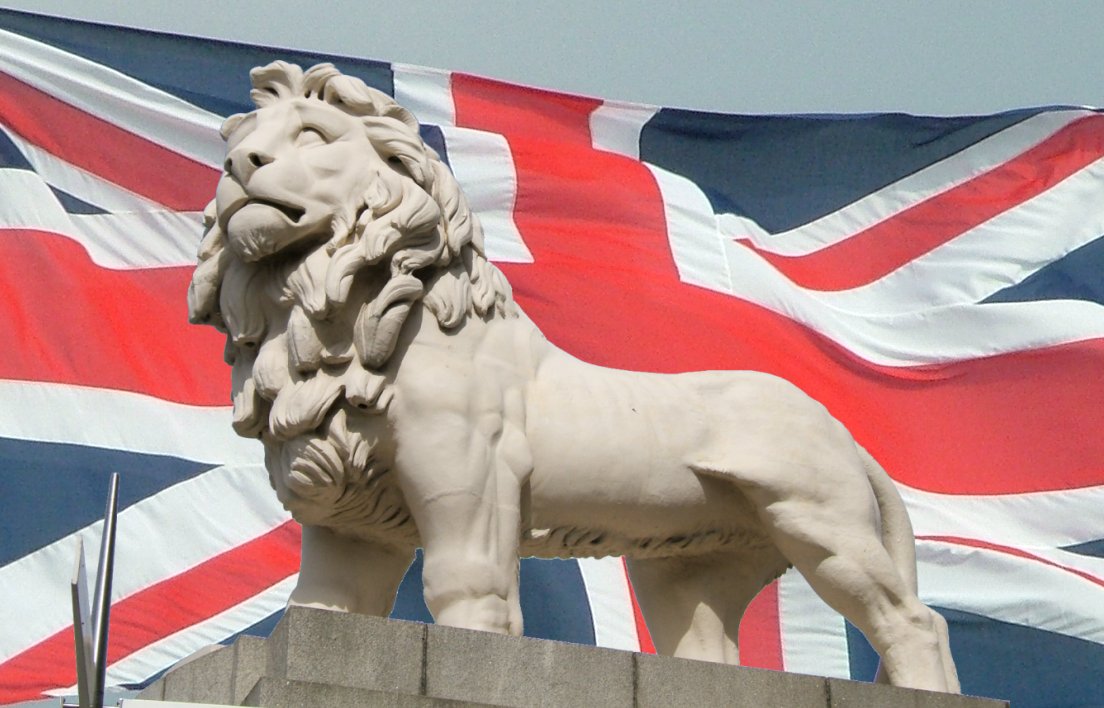
Scotland is the second most important country in the ‘United Kingdom’ after England. Like England, the lion has been the symbol of this country since its inception.
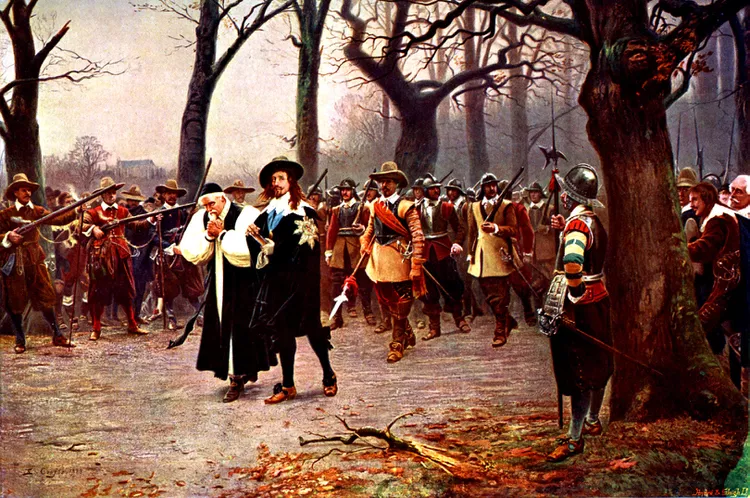
AD 1603. James VI, the King of Scotland, was crowned as King of England and Ireland under the name ‘James I’. Since Elizabeth I, who ruled England before him, had no children, for the first time in history, the English accepted a Scottish king as their king. As the three kingdoms of England, Scotland and Ireland came under the same leadership during his reign, a joint kingdom called the ‘UNION OF CROWNS’ was formed. This union lasted until AD 1649.
The Kingdom of Great Britain was formed!
May 1, 1707 is an important day in the history of Britain. Because it was on that day that Scotland and England, which had been separate kingdoms until then, united and became one country. A new advanced country called the ‘Kingdom of Great Britain’ emerged in European history. The parliaments, laws, flags and symbols of the two countries were merged. A new law, flag and symbol for the union were proclaimed. In them, importance was given to the past identities and characteristics of the two countries and the features of the new country were reflected. January 1, 1801. The Kingdom of Ireland also joined the Kingdom of Great Britain. Through this, the ‘United Kingdom of Great Britain’, today’s United Kingdom or United Kingdom, was formed.
America became a colony of Britain!
Between 1606 and 1670 AD, individuals and commercial companies from England and Scotland began to establish settlements in the new continent of America, discovered by European navigators Columbus and Amerigo Vespucci.
At that time, the united kingdom of England and Scotland, called ‘Great Britain’, had not yet been formed. Therefore, the American colonies of that time were called ‘COLONIES OF ENGLAND’. However, since the formation of the kingdom of ‘Great Britain’ with England in 1707, they began to be called ‘COLONIES OF GREAT BRITAIN’. They were generally called ‘British America’ and ‘British West Indies’. Since Columbus, who first discovered America, named it ‘West Indies’, America of that time was also called ‘British West Indies’. These colonies were ruled from London, the capital of England.
‘Great Britain ruled America for more than 175 years!
At the same time as the British colonies in America, French and Spanish colonies also took place. Just as there were competitions and wars between Britain, France and Spain in conquering Indian territories, there were also such wars among them in conquering American territories. However, just as Britain defeated the competing countries and brought most of India under its rule, it brought most of America under its control.
The American Revolutionary War that sowed the seeds for independence!
In this situation, the 13 colonists of today’s America, putting aside all the racial and linguistic differences between the British and Spanish, recognized themselves only as Americans, and united for the American land they had settled in. General George Washington led the way. This historic revolutionary war, which began in 1775 AD against British rule, is called the ‘AMERICAN REVOLUTIONARY WAR’. At the end of the war, the American Revolutionary Army defeated the British army. The United States of America declared independence on July 4, 1776.
However, it took until 1789 for the new country, the United States of America, to be fully formed. It was in that year that George Washington took office as the first President of the United States.
Britain defeated America again!
As if the story of America’s ‘fake news’ had been bothering Britain, it began to create obstacles to American trade. As a result, war broke out between the two countries again in 1812. Historians refer to this as the ‘WAR OF 1812’. This war, which took place during the most intense period of the ‘Napoleonic Wars’ in Western Europe, lasted until 1815.
Surprisingly, the American eagle won this war too. With this war, Britain’s dominance in America was almost completely ended. Apart from the United States, there was no other country on the North American continent. Britain was content with keeping only the big country Canada under its control.
• The story of the conquest of the Indian subcontinent!
The event of the conquest of the Indian subcontinent as its colony was a major turning point in the rise of Britain. Britain entered India under its usual commercial guise under the name of the ‘East India Company’. In 1757, an army led by Robert Clive captured one of the most important parts of India, unified Bengal. In 1776, the Mysore Kingdom fell. Following that, the Marathas were defeated in 1818 and the Sikhs in 1847. As a result, almost the entire India came under British control. In 1857, Britain began to rule India directly under the name of the ‘British Raj’. Britain, which took exactly 100 years to completely conquer India, continued to rule it for a little less than 100 years. Antarctica was discovered in the late 19th century, when Britain was on the rise. There were no people there. 90 percent of it was covered in ice. Otherwise, Britain would have established its rule there too.
Britain, which made India its headquarters in the Asian continent, began to expand its territory throughout Asia from here. India’s neighboring countries, including the then Pakistan, such as Afghanistan, Burma, and Sri Lanka, came under British rule. British dominance was expanded in Arab countries like Kuwait and Qatar, as well as in areas like Singapore and Hong Kong.
• Britain in Africa!
Britain, which entered Africa as a trading company, took control of Kenya in 1888. Subsequently, many African countries, including South Africa, also came under British control. Through this, 30 percent of the African population became British citizens in the 20-year period from 1880 to 1900 alone.
• North America South America!
Since the time when the world was divided into continents, the continents of Asia, Africa, and Europe have been known as continents. It was in this context that people like Columbus and America Vespucci discovered North America as the fourth continent. Only Britain has the honor of establishing and ruling its own colonies on a newly discovered continent. Even though it lost America, it still had Canada, one of the largest countries in the world.
In South America, Britain also had colonies called Guyana and Honduras. Bermuda and Angola, along with 5 other islands, are still under British control.
• A quarter of the world is in Britain’s hands!
Britain, which was based on the European continent, had established colonies on continents such as Asia, Africa, North America, and South America, and had completely brought the Australian continent under its rule. There are a total of 7 continents in the world. Of these, the 7th continent,Antarctica was discovered in the late 19th century, when Britain was on the rise. There were no people there. 90 percent of it was covered in ice. Otherwise, Britain would have established its rule there too.
The beginning of the 20th century. 1913. The country ruled 25 percent of the world’s land area, forming an empire the world had never seen before. The Organization for Economic Cooperation and Development says that ‘412 million people in the world were British citizens, which was 23 percent of the world’s population at that time. In this way, Britain emerged as a great power ruling a quarter of the world with 25 percent of the land area and 23 percent of the population. Therefore, the new name ‘Empire on which the sun never sets’ began to be given to Britain.
1914. World War I broke out due to the invasion of Germany and the Austro-Hungarian Empire in Europe. Britain, France and Russia were called the ‘Allies’, while Germany, Austria-Hungary, the Ottoman Empire and Bulgaria were called the ‘Central Powers’. Britain had the opportunity to defeat these empires that had been collapsing from the European continent in a single war.
The routes to import raw materials for the manufacture of shells for British military artillery were blocked during the war. Due to the shortage of shells and war strategies, Britain faced various shocks on the battlefield for the first three years. In particular, in the second year of the war, at Gallipoli, Britain suffered a humiliating defeat in the year-long war against Ottoman Turkey. Later, the shortage of weapons was eliminated and the British forces entered the battlefield under the name of ‘Operation Palestine’ under the new Prime Minister. It did not win the First and Second Battles of Gaza in March and June 1917. Later, it was victorious in the Third Gaza War led by Edmund Allenby. Palestine and the city of Jerusalem, which had been in the hands of the Ottomans for 401 years, were taken over by Britain.
• Britain that rescued Israel and Jerusalem!
There are various prophecies in the Holy Bible about the re-establishment of Israel, the return of the Jews to Israel, and the events that will occur in the end times centered on the country. After the Zionist Union, which worked for the creation of Israel, Britain and the First World War played an important role in fulfilling all of them. Britain’s First World War victory played an important role in allowing the Jews, who were expelled from Israel by the Romans in 70 AD and who were scattered all over the world, to settle back in Israel after 1947 years.
British forces, who were engaged in the Gaza Wars under the name of ‘Operation Palestine’, were fighting with the goal of recovering Jerusalem by Christmas, under the orders of British Prime Minister Lloyd George. On the night of December 8. Ottoman Turkish forces left the city of Jerusalem. The next day. 9.12.1917
Another miracle took place in Britain. Heeding the request of Dr. Seymour Weizmann, a Jewish scientist who was a major factor in Britain’s victory in the war, Foreign Secretary Arthur James Balfour issued a historic declaration.
In the declaration, it was announced that “Britain has no objection to the Jews, wherever they may be, coming to Palestine and establishing a home for themselves there.” Following this declaration, millions of Jews began to come to the land of their ancestors and settle there.
• Fallen empires!
The empires that fought against Britain in the name of the Central Powers were also put to an end in history.
Ottoman Empire
In the Roman Empire, which was divided into two parts, the West and the East, the Eastern Empire operated with Constantinople as its capital. Later, it was conquered by the Ottomans and the Ottoman Empire was established. The Ottoman Empire, which had ruled for 601 years as an unshakable empire spanning three continents: Europe, Asia, and Africa, was crushed by Britain’s ‘Operation Palestine.’ The Ottoman soldiers were devastated by Britain’s three-armed attacks. Millions of lives were lost. They could not withstand Britain’s modern weapons. In 1922, the Ottoman Empire was dissolved, and today’s Republic of Turkey was born.
Germanic Empire
Among the most important reasons for the fall of the Roman Empire, the Germanic tribes played a very important role. It was their continuous attacks on the north of the empire that led to the fall of the Western Roman Empire. As a result of their migration throughout Europe and mixing with other races, European races including the English, French, and Italians were formed. Germany, which played a major role in the history of Europe, creating new empires in Europe in the post-Roman period, suffered a severe setback at the end of World War I. The country, which started the war as an empire, suffered an unprecedented economic crisis.
Austria-Hungary
The Austro-Hungarian Empire, which had been the dual monarchy of Europe until World War I, was completely disintegrated. With the defeat of the war, Hungary immediately freed itself from Austria and began to operate as an independent country. Subsequently, 14 regions separated from Austria and began to operate as independent republics.
Thus, Great Britain became more powerful than ever, defeating the three great empires that dominated Europe in its time in a single war.
• The Fall of Britain!
Although it won the First World War, it was a last-ditch victory. After the next 20 years, Britain was forced to engage in the Second World War. Although it won this war too, Britain could not escape the terrible effects of that war. Like all European countries, the country was caught in a severe economic crisis. To cope with the situation, it decided to liberate countries like India that were under its domination. India became independent the very next year after the war. Many other countries were subsequently liberated.
As countries withdrew, Britain’s area decreased and its sun began to set. In this situation, Britain, which had already faced two major wars in succession, launched the ‘Suez Canal War’ against Egypt in 1956, along with Israel and France. Although Britain was victorious in this war, there was severe turmoil among the nations of the world and within the country. Following that, it withdrew from the war. However, with that war, Britain’s dominance almost came to an end. Meanwhile, America, the eagle’s wings plucked from the lion called Britain, had risen as the new superpower of the world.
About the Author